Sunday, 14 April 2013

On: Mario Empalado


All you have to do go to the freeindiegames page of Mario Empalado and you'll see what the general idea of this game is. Many people seem to feel that it's crass, juvenille and sort of gross. I understand that. I even understand if that makes you not want to play it, or it totally turns you off from the game. But I actually like Mario Empalado. I like it a lot.

 I think people are making a mistake about what the game actually is. Paiva calls it a "hate letter to the games industry," but I don't think he's being totally honest. Paiva is a good designer. He's made a lot of games. He's taught them to 11 year olds at workshops. I think he's smarter than what Mario Empalado would suggest of him at the surface, and I think it's important to trust what he's trying to do.

I don't think that Mario Empalado is the HotlineMiami/FarCry3 self-reflection shooter that it probably initially implies for a lot of people. The reason why the FarCry3 'reflection' game fails, is because it's inherently disingenuous at its core. It wants you to feel bad for shooting others, yet shooting is designed to be enjoyable. It's mechanics tell you that FarCry3 is a game to have fun with, but it's narrative (not even full-heartedly) tells you that it's bad, in ways that are superficial and meaningless: through absurd cutscenes and weak dialogues of "what have I become" in between hours of shooting down coloured people. Games like FarCry3 are in conflict with themselves, and become incapable of properly saying what they want to.

(I encourage you to read Brendan Keogh on the subject)

This isn't what Mario Empalado is. Mario Empalado isn't disingenuous, and it's nature is not a veneer.  Everything you do in Mario Empalado is exactly what the game is trying to suggest to you it is. The shots themselves, for example, aren't satisfying or enjoyable. They feel dead, and hollow. There's no feeling of feedback or response to them; they just have this low-quality soundclip, which makes your shots feel cheap and useless, like garbage. Everything about Mario Empalado feels gross and repulsive. But it doesn't just tell you that. It actually curves it's entire aesthetic and mechanics towards instilling the feeling of disgust.

Think about how Mario Empalado looks. Think about how its aesthetic is literally composed of colored neon-like outlines on pure black. It feels so ugly and uncomfortable, like an dirty city alleyway at midnight. 

If Mario Empalado is dishonest, it's dishonesty probably comes from the surface assumption that it's attempting to act as some kind of industry criticism. I think its "fuck the games industry" surface exists to manifest the militant nerd-gamer mentality, but I don't even think it's the point. What brings Mario Empalado full circle, is its ending, the point where you're disconnected. The game drowns your head in mucky water, and then pulls you up, to show the contrast between the political intensity of the embedded metagame, and the dry, mundane reality that acts as its frame narrative. The transition in turn, communicates that what you just spend your time on was pointless. "What you did was meaningless," says Mario Empalado. "You're just some asshole on a computer. Look around you. What are you doing with yourself?" Asks Mario Empalado as you stare at the clock showing midnight, the leaky roof you still haven't fixed, the door closed to your room, revealing your own sad isolation. 

Again, this is not the same as the ironic self-reflection shooter. Mario Empalado is not commenting on the morality of my complicity in its systems. The game is well aware that what I'm doing is awful. The game does know that, yes, I know that what I am doing is terrible in a real world context. I do not need to be told this over and over again, as I, like you, am not an idiot. Instead, Mario Empalado removes us from the metagame, to show the destructive disconnection that exists in games, the kind that would allow for such extreme violence to exist unquestioned in the first place. 

Let's look a little outward for a bit. Do you remember Russ Pitt's Polygon review of Sim City, where he praised the game for its addictiveness? He discussed how the game caused in to miss a meeting:

"As for how satisfying the experience is as a whole, take this example: I missed a meeting. And it was my meeting. During the course of one play session, I literally became so absorbed in the experience that I lost all track of time and played through an entire afternoon, oblivious to the fact that a meeting I had scheduled approached and then passed. When I returned to my work station many, many hours later, I greeted my overflowing email inbox and the raft of polite (but concerned) inquiries as to my whereabouts with a serene, self-possessed calm. As if, whatever troubles the world might throw at me would be of little concern next to the travails I had experienced in West Pittssex."


Upon reading this for the first time, I found it incredibly disturbing. Why would someone view a game causing them to miss their meeting as a positive? A game that would, apparently, have no respect my time, no respect for my autonomy and my self as a human being, who has priorities and goals and passions, but rather views me as a hollow piece of meat, a means of perpetual consumption who purely exists to put time into itself, like a fordist factory worker puts in labour. Is that not disturbing? Is that not terrifying?

Perhaps, but it's also revealing of what I think is the full circle of Mario Empalado. A culture that doesn't respect itself. A culture that doesn't like itself, and searches not for meaning or purpose, but total disconnection, in order to satisfy its subconscious self-loathing

In that way, I find that Mario Empalado is better than the reflection-bro shooter. It's probably the most effective game that directly comments on the nature of violent play I've played.

--------

Also, as an end note, this is a good chance to play more of Paiva's games. He's a very good designer. Carrocracia was just put up today on freeindiegames. Check it out!


Sunday, 24 February 2013

On Antichamber's Nature Music


I want to talk about Antichamber's nature soundscapes, which play in various forms and styles that correspond to certain places in its universe. I think Antichamber's nature music is important; I'd almost argue that the Antichamber's nature soundscapes make Antichamber. They're a crucial part of its narrative framing. Let me explain!

During the first few moments of the game (essentially before you get the staff), Antichamber sort of acts as horror. It plays with your senses, predicting your movements and manipulating your actions though distorting your sense of space and time, and there's nothing you can really do about it. You start to feel helpless, incapable of escaping this abstract, invisible force that seems to be omnipresent. If we isolate the projection that receives my input from the existence of myself as a player, we can say Antichamber is a true depiction of one's madness as a living hell, where one is moving and acting without purpose or context in an endless fervor and confusion. It's creepy and disturbing. 

The nature music plays an important part in this. We can modify the structuralist method a little(1) so we can fit it into games, and find a key contrast between its music and the nature of my input. See, playing through Antichamber's early moments is an exercise in helplessness, confusion, and distortion, which can all imply stress and franticness; but it's nature music implies the opposite: calmness, patience, and thoughtfulness. But that doesn't mean it's ludonarratively dissonant! Antichamber isn't contradicting diagetic elements with mimetic ones, but rather mimetic elements with aesthetic framing (the music). So what we get instead, is something that feels very disingenuous. The nature sounds tell me to be calm while I run around the same circular path for the 15th time. It's contradictory and confusing, another way that the environment fucks with me. All this adds to the idea of Antichamber as horror.

But then, of course, you get a staff, and everything changes. It's amazing how much a little more control can turn things around. Now, Antichamber's nature music plays a much simpler role. Because I have the staff, I feel much less helpless. I'm now more of an actor onto the world, which means that the nature music no longer feels like a contradiction, but rather a simple device used to frame the nature of my actions in its intended fashion. Now, Antichamber truly feels like a calming and tranquil experience. 

But regardless of the little control I have, the nature of this environment hasn't really changed. It still has the tendency to manipulate and confuse, yet the game's mood has totally flipped over because of the nature soundscapes. This is why the nature music is so important. It takes an Avant-Garde nightmare and turns it into a lax puzzler, thereby setting a very large part of the game's mood. 

Something else that I find remarkable, is the disconnection between what the nature soundscapes suggest of the environment, and what it actually is. Antichamber is composed of white doors and hallways, rectangular rooms and maps, but the nature music, obviously, depicts forests and jungles. Yet the game relatively brings across the same feeling! This is another kind of disconnection, and seems to strike right in the face of those who believe that deep immersion and engagement relies on consistent aesthetic portrayals that properly correspond to a sense of reality. Antichamber shows us that all that's necessary is a proper assortment of ideas, moods, and rules to create an meaningful experience.


(1) Structuralist criticism finds parallels, contrasts  and patterns within text to find meaning. This is me clumsily trying to apply it to games. I hope it worked a little. 

Monday, 4 February 2013

On Pippin Barr's "Art Game"


So Pippin Barr released "Art Game" today, a game you should probably play since it's actually really fun.

I like "Art Game" because it exists in a sphere where the idea of games as art is very charged and heavy and sort of tired out in a lot of areas. If you read this blog, chances are you tend to engage in the indie sphere where the idea that video games are an art form is pretty much a given, where everyone just assumes it as true, but it's still debated in many mainstream publications. Yet,"Art Game" feels like an inhibitor, a sort of reduction of the intensity around the idea of art, into something that feels ordinary and typical.

Art Game is so simple. You make art. A curator looks at your art, she likes it or doesn't and eventually puts it in a show, where observers share their opinion on what they think. Some of them don't really like it. Others think it's okay. You look around and see other paintings and eventually leave and go about your life. The point is that Art Game doesn't really try to throw these intense, strong opinions on what it thinks about art, or games, or criticism or mediums and such, rather it simply presents a situation where I make some art and show it to a bunch of people. None of these elements are exaggerated, or glorified, or demeaned or opposed, at least not explicitly or implicit enough to be clearly visible. They seem to just exist as they are, under the game's gray-scale palate and its non-existent soundtrack.

I don't think the game wants to say that art is *boring*,  and I especially don't think that it's not saying anything at all. Rather it seems to demystify any sort of romanticism regarding art, without plunging us into brutal realism. Creating and presenting art, sort of just exists a thing. There's a neutrality to how the game is depicted, and  by doing this, it actually ends up saying quite a bit about art. That the idea of art isn't too much of a huge deal; it's a thing that people make, that some people like or don't like, that we all just sort of enjoy and talk about it and then go on with our lives.

I kind of like that.

Sunday, 20 January 2013

Old Post: How CLOP is Both a Sadist And an Optimist

Before the eventual deletion of my old blog, Fengxi, I'm taking my least terrible posts and giving them a home here. I'm also editing them a bit so they're not as awful to read. Take a Gander...

--------


CLOP is the antithesis of a power fantasy. Every aspect of its design is in place to remind you of your insignificance. Unicorns in art and literature are portrayed as creatures of beauty, who symbolize grace and majesty, but Clop is anything but. Instead, your sprite is ugly and of low quality. Your movement is crass and graceless as you stumble and fall incessantly. And you spend the game chasing the false prospect of a virgin, a goal that hardly feels important or significant.

The naming of the horse as "Clop" is the equivalent to calling a dog "mutt," or a human "meatbag." It's derogatory; it strips the horse of any personality or individualism, portraying a talking unicorn as simplistic and insignificant. Your projection should be wondrous and grand, a symbol of purity and elegance; instead you're clumsy, foolish, and mediocre. You're a walking contradiction. By confusing and messing with your identity, the game facilitates your mocking. The projection of a strong, confident hero is now taken away.

Add this to how the game fetishizes our failures. It's obstacles are embarrassingly simplistic: a rock, a small ditch, a piece of stairs, suddenly followed by a large cliff. It's teasing the player, and mocking our failures with relentless humour. When playing the game, I decided to exclusively use both front hooves, and after a few moments, the game disables the horses back legs. The tag "Lame Horse Mode" flashes above, as it slowly limps across the ground. It was then I realized that CLOP is a sadistic game. Our identities are crushed and our abilities are handicapped. And our struggles and failures are not only mocked, they’re celebrated. It feeds on them; they’re the game’s central aspect.

Yet at the same time, CLOP is an optimistic game. With all its failure and struggle, the game never ceases to be enjoyable. It’s portrayal of the unicorn is quite funny, and there’s humour to be found in its mean-spirited satire. Despite its nature, it’s still likable and brought me positive sentiments as a player.

Perhaps that’s the point of CLOP. To show that there’s real, sincere enjoyment to be had in incessant failure, and clumsiness, and foolishness. It tells us, as oh-so-majestic unicorns, not to take ourselves too seriously. After all, are none of the things we do ridiculous, to some extent? Have our failures never been amusing, or enjoyable?

These are the kinds of questions CLOP is asking us. They're insightful, important questions, ones that you could miss if you dismiss CLOP as some kind of joke. But it's very ironic how CLOP gets its ideas across. In order to get the message you may be taking yourself too seriously, you have to take the game more seriously than you normally would.

If anything, it’s illustrative why CLOP is so deranged. It’s a mess of contradictions that are somehow cohesive. CLOP simultaneously presents us an idea and it’s contradicting counterpart. It’s both a plea for humility and an argument of the benefits of serious analysis. It’s a destruction of one’s identity for the purpose of creating its own. And it’s both a sadist and an optimist. Polar, much?


- Published August 21, 2012

Thursday, 17 January 2013

Cactus Block, Momentum, and Our Tools

I recently played chuchino's Cactus Block 2013, and there are things that warrant discussing.

We tend to think of mechanics as systems that should "work." We use that word, "work" a lot, like games are systems that exist exclusively for our use. I get it because a mechanical system shouldn't make it difficult for me to engage with content intellectually. If I can't walk in a game when it expects me to walk, I can't play the game, and therefore can't properly engage with it. Same thing with a broken DVD, or a book with ripped pages.

But just because its justified doesn't mean the expectation doesn't exist! I feel it's possible that  because of the mindset of "working" mechanics, we stop thinking about the systems or tools that constantly produce consistent results for our use. It's the simple idea of not thinking about where your tap water comes from, or where your food is made.

If the block making thingy in Cactus Block 2013 always made blocks, then it just becomes a static object that we stop thinking about. It becomes nothing but a means to block making, a square outline on our screen. But with the simple addition of the cactus, the box's antithesis, the game opens up this weird middle-space between us, and the block/cactuses that are made. That cursor outline is its own thing, an entity that we're now forced to have dialogue with.


I feel like when a system is consistent and reliable, we can produce strings of interactions to the point where we aren't thinking anymore. There's a momentum that players can develop, to the point where we can stop really paying attention. I can't develop that in Cactus Block 2013. I'm too busy accommodating  for an imperfect system.

I mean, what does all that momentum breaking allow? In a game like Street Fighter, if I get into a certain zone, I stop paying attention to everything else. Because of that, I never really get to see the small intricacies around, like how the music changes when health is low, or subtle quirks in the stages. I didn't notice these things for a long time! So perhaps momentum, in a sense, is myopic. It focuses my attention to a few specific ideas, to the point where I ignore everything else. Yet because of a very simple design choice, Cactus Block kind of becomes the opposite.

If this is true, maybe a game like Cactus Block would allow elements that would feel subtle in other games to be more pronounced? Intricacies in environments and aesthetic that could forward a narrative. The problem with a lot of games is that they carry these intricacies, but I'm too busy moving around, shooting, developing a momentum to pay attention to them. Hence, a narrative is never built.

It's possible that, for narrative to happen outside a player's actions, you have to reject their momentum. You have to get them to actually pay attention. I really like the way Cactus Block rejects my momentum by creating inconsistencies in its systems, and I think there's opportunity there to make something really interesting.

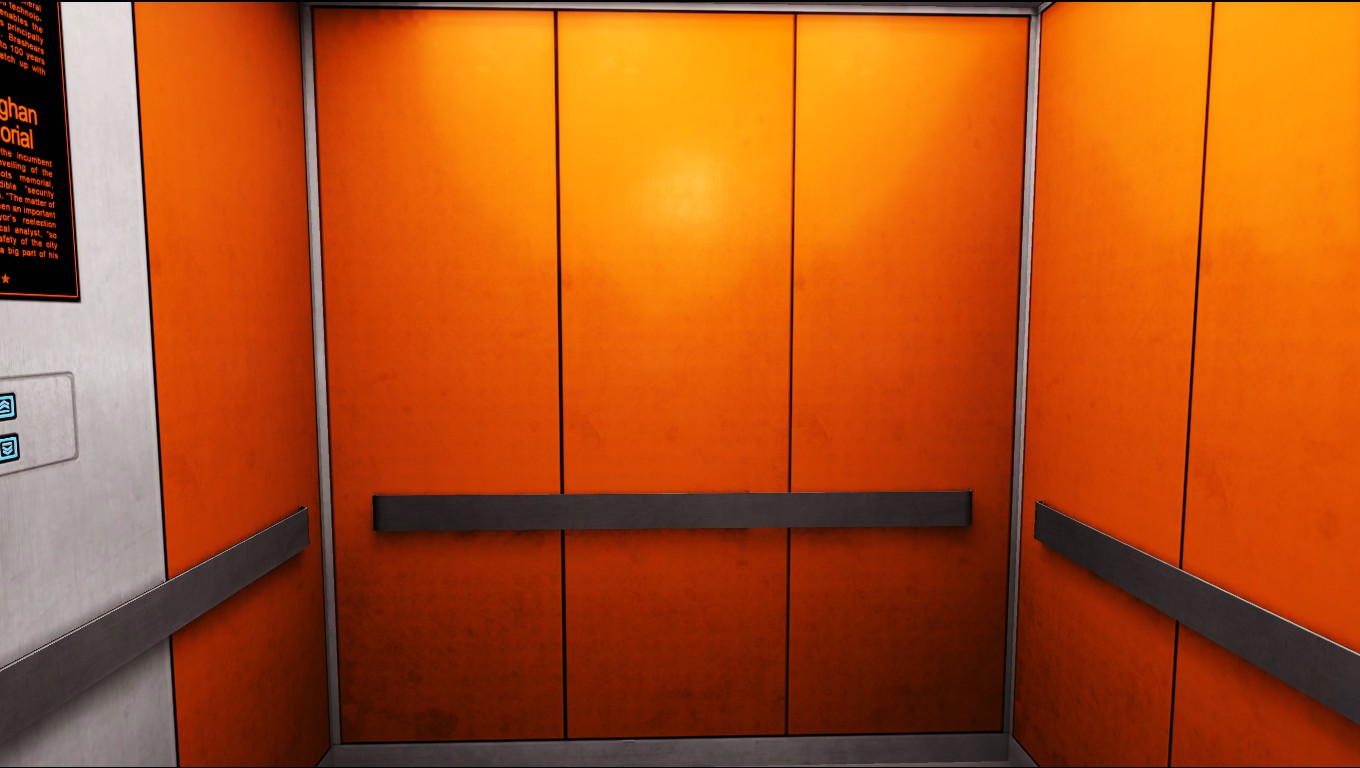
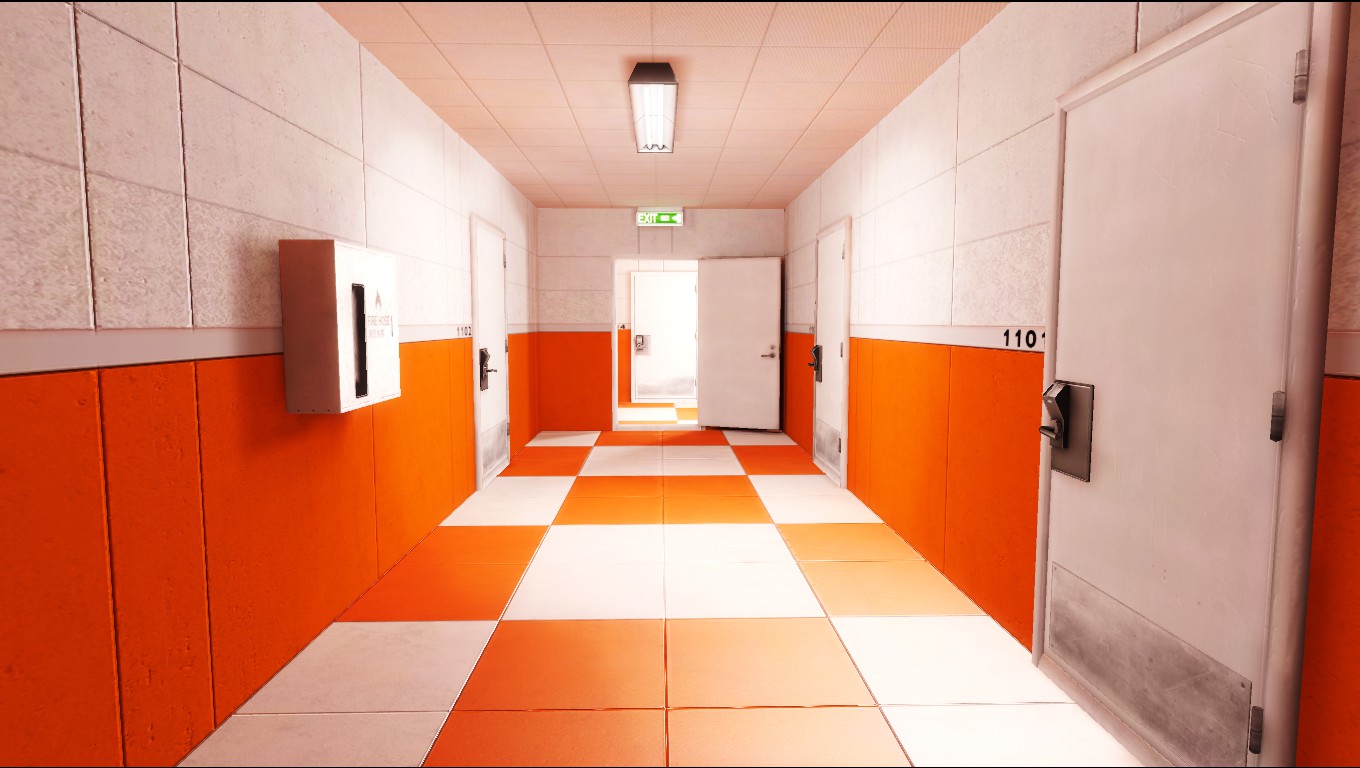
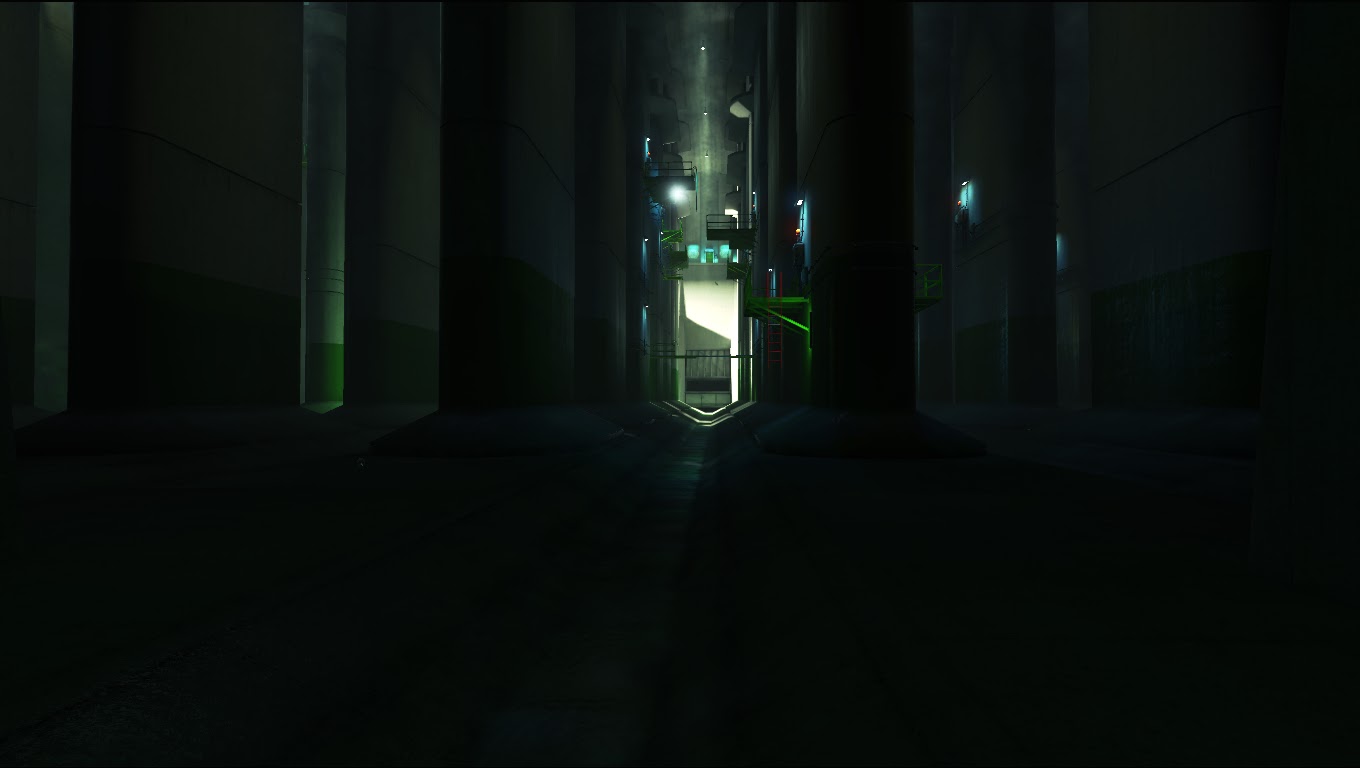
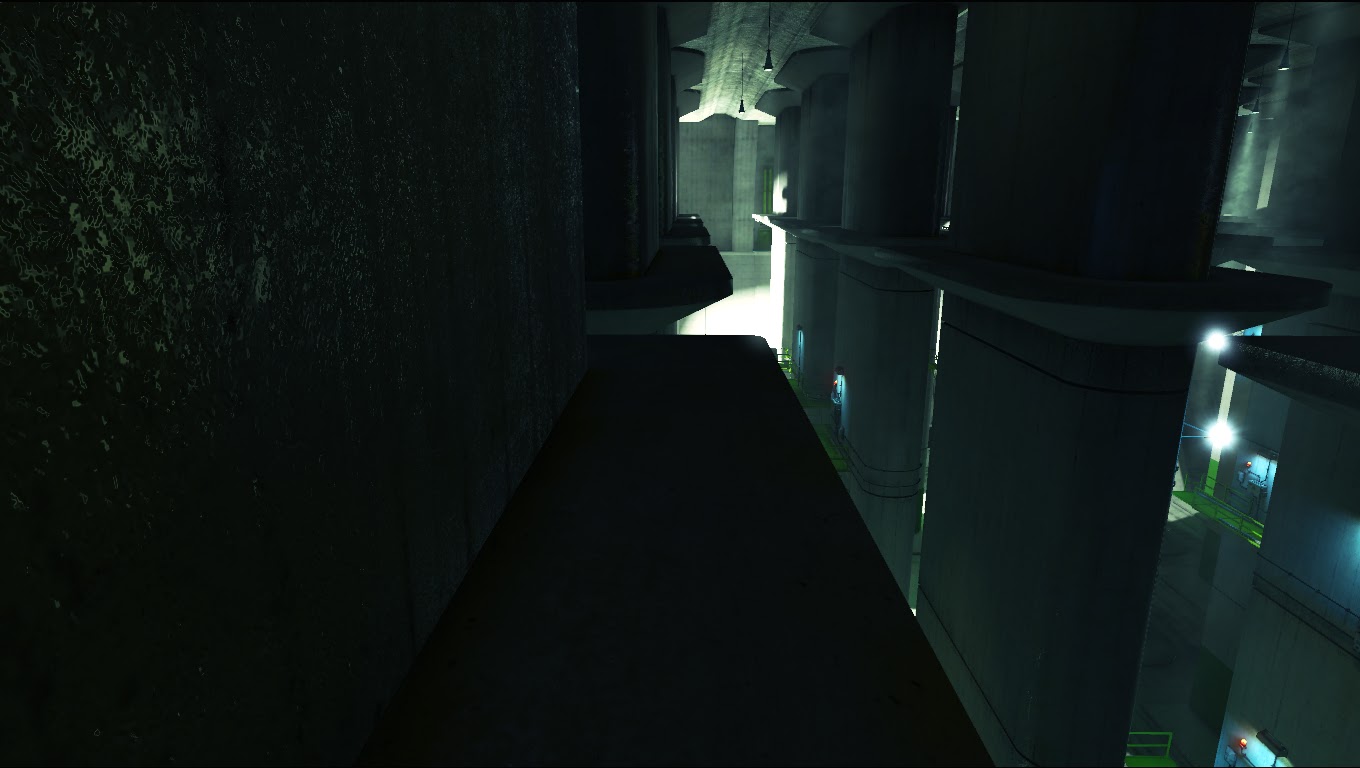
Mirror's Edge Screenshots

I'm taking screenshots of Mirror's Edge. The game is so gorgeous. It captures the beauty of urban spaces so well, even after five years. I'm playing it now, so I'll be updating this post with more screenshots.


Thursday, 10 January 2013

Quickie: A Dissonance of Chells

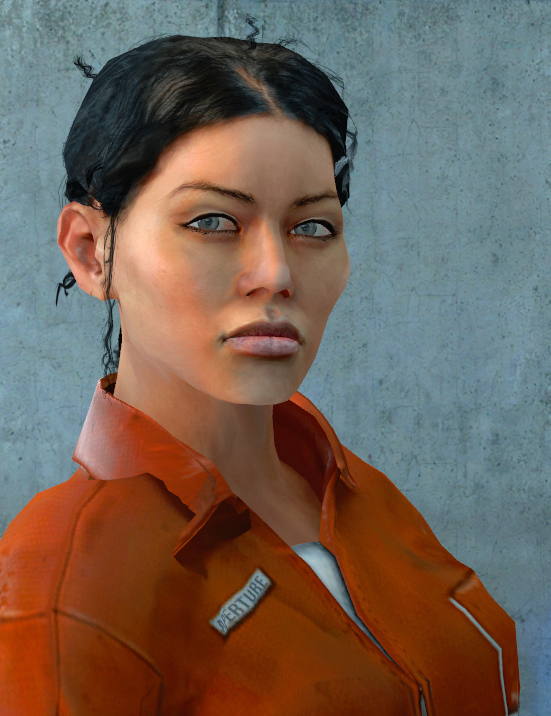
When I commented on a photo Chell from Portal 1, a friend, Kim Moss expressed disdain at her appearance change in Portal 2. She felt, at least from what I took out, that they ""prettied" her up." There seemed to be something weird about her appearance in the second game. I hadn't noticed it before, but now looking at both photos, I think I can pinpoint some of the weirdness.


Portal 1
Portal 2


Chell in Portal 1 is dirty and uncleanly; there's a sense of disorientation in her that gives credulity to Portal's narrative. She really looks like someone who is moving through perpetual white rooms, falling hundreds of feet at a time, only held in place by cold, steel mechanisms bolted to her bare leg. A loud, omnipresent voice fills the room, telling her where to go, what to do, with a subtle, frightening subtext of consciousness. She's also alone, to her own thoughts, for a very long time.

In comparison, Chell in Portal 2 looks like she's going to the gym. She looks clean, younger and healthy. Her lips are glossy and opaque, as opposed to dry and unkempt like before, where you can even see some dead skin. Her hair is in this neat tie thing, that falls to the sides of her face in this way that feels constructed, like she thought of that, like she had the time and energy to carefully construct her appearance, which she absolutely does not in Portal 2's setting.

It's sort of a good example of a very subtle, casual kind of male gaze. I hesitate to call it problematic, as she does look like a normal human being, but it's definitely dissonant with its narrative. And I feel like it perpetuates an idea that women, even in the most straining, horrible circumstances, can and probably should be able to keep up that level of appearance. So I guess it is pretty problematic. :/

I'll leave you to your thoughts.